
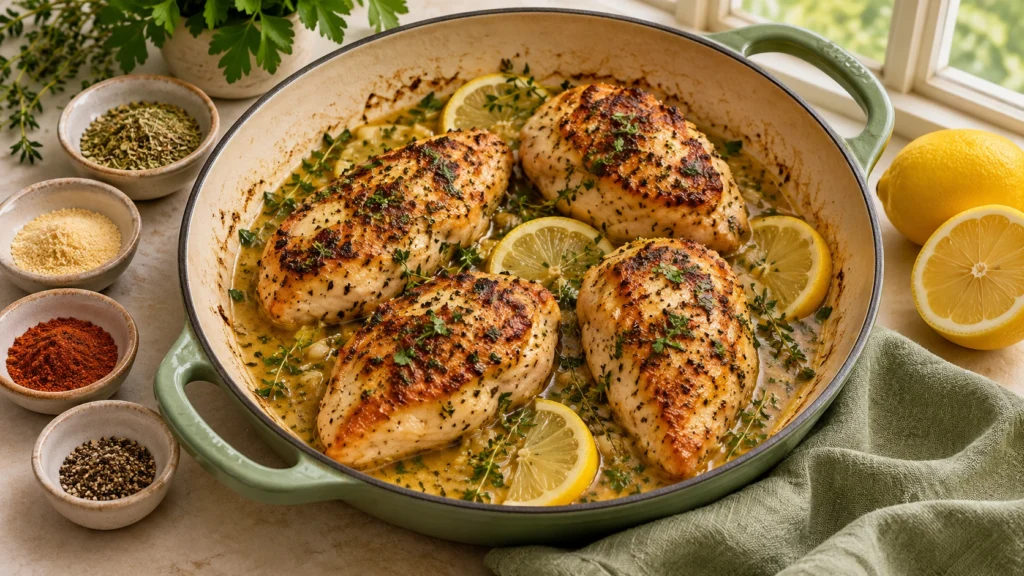
You can make flavorful chicken tonight without a marinade. Use a measured dry seasoning for an even surface, a quick pan sauce when the recipe builds fond, or a separately prepared condiment for a fresh finish. Match the method to the cut. Thin breasts suit a short skillet recipe, while thighs can suit a richer sauce. Verify 165°F (74°C) in the thickest part.
Choose a way to add flavor at the right stage
A marinade involves time in contact with the meat. A same-evening plan can use flavor at a different stage. Dry seasoning spreads across the raw surface just before the cook. A pan sauce develops from the pan and is finished after the chicken reaches temperature, when the recipe allows. A table condiment goes on a fully cooked portion using clean tools. These choices affect the meal differently, so pick the one that fits the method and the time you have.
Dry seasonings work best when you can measure them and distribute them evenly. Check whether a blend already contains salt, sugar or a strong herb. A sweet blend can darken on a hot surface before the chicken is ready. Choose a recipe whose heat suits the blend and the cut. Pat raw chicken dry if the method asks for it, using a disposable towel and keeping any raw juices away from the rest of the food. Avoid washing raw poultry.
| What you have | Same-evening route | Where to put the flavor |
|---|---|---|
| Thin, plain breast cutlets | Dry-seasoned skillet recipe | On the surface just before cooking |
| Boneless thighs and a pan-sauce recipe | Sear and finish with the stated sauce | During the pan finish |
| Plain cooked or raw chicken with a quick side | Separate lemon, herb or yogurt condiment | On the finished portion |
| Pre-seasoned chicken | A method that suits its label and cut | Add optional salt only after tasting the cooked food |
Dry seasoning for even coverage
Mix the amount needed in a clean bowl before you handle raw chicken. This keeps hands and raw utensils away from the spice jars. Use enough to cover the intended portions evenly and follow the directions for oil and heating. A thick crust of powder can make a quick meal taste harsh or burn before the center finishes. The objective is consistent coverage and a method that gives the coating enough time to cook. Put any extra clean seasoning aside before it touches the chicken.
For an example, imagine two thin breast cutlets and a simple green side. Choose a skillet recipe for those cutlets and use its herb and salt amounts. Set aside a small amount of chopped herb or lemon separately if you want a fresh finish. Cook the chicken through, then compare a bite with and without that extra finish. It is easier to add more at the table than to correct a whole batch coated too heavily in a strong blend.
For a buttery finish with specific timing, see Buttered Chicken.
Pan sauce for a meal that wants extra moisture
A skillet can make two jobs fit on one burner, first cooking the chicken and then finishing a sauce. Measure any stock, butter, herbs or acid the recipe calls for before the chicken goes in. Manage the surface so the browned bits remain useful. If they are scorched, avoid scraping them into a sauce just because the recipe calls for deglazing. Choose a clean sauce base if necessary.
Move fully cooked chicken temporarily to a clean plate, then finish the sauce as directed. With thin breasts, keeping the cutlets on the heat while a sauce takes longer to reduce can affect their texture. With boneless thighs, the pan may contain more rendered fat. Follow the recipe’s instructions for what to keep before adding liquid, and choose a method written for the actual cut. Verify the center has reached 165°F (74°C) rather than relying on browning or the length of the sauce step.
Table condiments for separate finishes
A simple sauce that never touches raw chicken can go on just before serving. A little chopped herb and lemon can add brightness. A chilled herb yogurt can suit a different meal if dairy is appropriate. A hotter condiment can go only on the plates that want it. Taste a small amount with a cooked piece before dressing the whole batch. A condiment can bring salt as well as flavor, so a plain base can give you more control.
Set up the condiment early at a clean station. If you are using it on the side, keep its spoon separate from the raw-prep equipment. Once the chicken is cooked, put some on each plate or let people choose a measured spoonful. Do not pour clean sauce into a bowl that previously held raw poultry or used marinade. Reserve any untouched condiment separately according to its storage directions. This makes leftover plain chicken easier to use for another meal.
For more weeknight methods, browse Easy Chicken Recipes.
Choose a route for the time and the cut you have
Suppose you buy small boneless thighs and realize you have no time for a marinated recipe. Pick a complete skillet thigh method that uses direct seasoning or a brief pan sauce and includes the correct piece thickness. Unfold or trim the pieces as directed so they cook in useful size groups. Prepare a plain side first. After cooking, use a little clean finishing sauce rather than trying to give the meat a rushed soak. If you want enough for tomorrow, set a portion aside before adding a strong topping.
For thick whole breasts, choose a compatible method instead of forcing them into a thin-cutlet timeline. If the recipe shows how to split or pound them evenly, account for the raw prep and cleanup. If it calls for an oven finish, check that the pan is rated for it. A dry blend can be quick to measure even when the meat needs a longer cooking method. Seasoning speed and cooking speed are separate.
Put tonight’s setup in order
Read the recipe through once and identify anything the marinade originally did beyond adding flavor. If it supplies liquid for a later sauce or is part of a specific published recipe, choose another method. Then set out the skillet or tray, clean measuring bowls, thermometer and cooked-food plate. Prepare any cold sides before opening raw chicken. Season, cook and check the thickest part, then finish with the sauce or garnish you chose.
Avoid reusing marinade or sauce that touched raw poultry as a finishing condiment. Keep clean ingredients separate from anything handled raw. Refrigerate cooked leftovers promptly in shallow containers and reheat to 165°F (74°C). If you cook chicken from a seasoned package, note how much extra salt you used and how it tasted at the table. That information is more useful than applying a fixed amount to every cut.
Arrange seasoning for a two-plate dinner
For two diners who want different finishes, choose one minimally seasoned base, make both sauces in clean bowls and use them after cooking. Serve the first plate with herbs and lemon and the second with a stronger condiment. If a sauce depends on drippings from the pan, make that sauce separately from a condiment intended to stay cold. Taste both finishes using their own utensils. A small serving of each can let diners choose without committing the whole dish to one flavor.
A no-marinate recipe can also work as a two-use plan. Keep the dry seasoning light enough for tonight and tomorrow, or reserve a cooked portion before adding sauce. When the same chicken is cooked in batches, measure seasoning separately for each round and keep the clean stock of spices away from raw tools. This makes it easier to correct coverage on the second round.
If using a blend for the first time, check the label before measuring salt. Some blends are seasoning salts, while others are mostly herbs and spices. Treat a sauce, cheese or prepared side as another possible source of salt. Wait until the chicken is fully cooked before tasting. If you want a fresh note without another preparation, use a small amount of lemon or a herb that is already part of the meal. Ready-to-eat sauce can be an easier finish when the pan and side are ready at different times.
For more on thermometer use and storing cooked chicken, see the HCCR chicken food safety guide.
Sources and references
Frequently asked questions
What can I use if I have no time to marinate?
Use a dry seasoning, a quick pan sauce or a separate table condiment. Choose according to the recipe and where you want the flavor.
Does the same shortcut suit thighs and breasts?
The same flavor can work, but thickness, drippings and cooking method differ. Choose a recipe for the cut and check its temperature independently.
Can I add lemon just before serving?
Yes. A little lemon or other clean condiment can add brightness after cooking. Taste it on a cooked bite before adding more.
Should I still use a recipe that depends on a marinade?
Choose a different published method if the marinade is an essential part of the recipe’s cooking liquid, timing or texture. A separate no-marinate preparation is easier to follow.


