
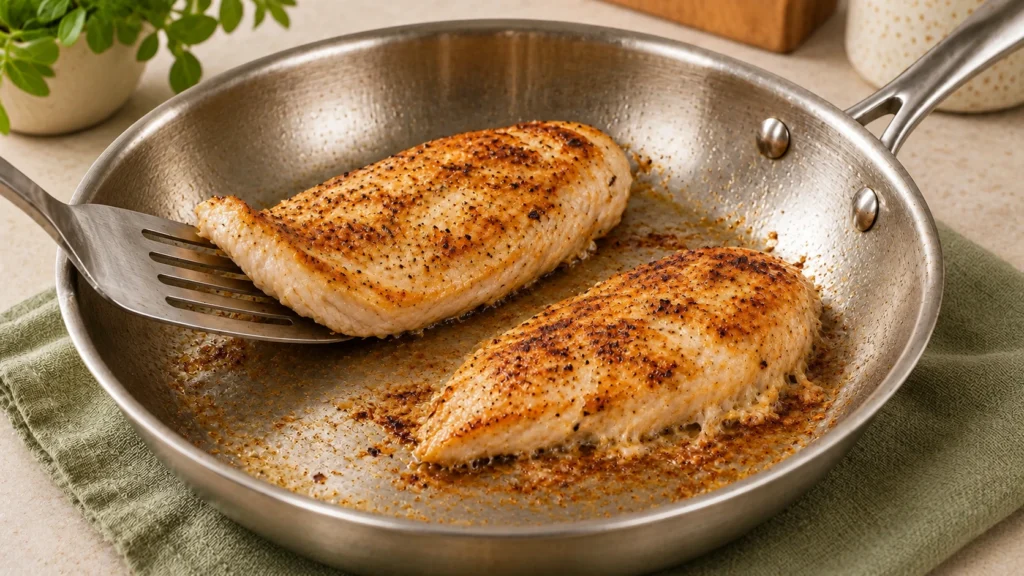
Chicken sticking to stainless steel can mean it has not formed a sufficiently dry, browned surface yet, or that the pan is too cool, unevenly oiled or burning. Preheat appropriately, dry the meat, add a suitable cooking fat, and test release gently. If the pan is scorching, reduce heat rather than waiting indefinitely. Check the meat reaches 165°F (74°C).
Watch the edges and test release gently
The first instinct when a chicken breast sticks is often to pull harder. That can tear a developing crust and leave a piece of meat welded to the skillet. A better first step is to observe the surrounding cooking surface. If the oil is behaving normally and the edges are beginning to brown, the chicken might simply need more time to develop a surface that releases. Use a broad thin spatula to test a small edge rather than pulling the whole piece upward. Moderate resistance early in cooking can be normal. However, blackening residue, harsh smoke or rapidly scorching seasonings indicate a different situation. Waiting longer under those conditions may burn the chicken instead of helping it release.
Stainless steel is not a permanently nonstick surface. Food proteins can adhere to the metal while cooking; heat, surface water, oil distribution and the formation of a browned surface all influence how much sticking occurs. A clean, suitably preheated pan and a thin layer of fat help make release more predictable. Even then, some residue is normal, especially when cooking a dish intended to produce flavorful fond for a sauce. The goal is not necessarily a perfectly spotless skillet. It is to keep the food intact and cook it safely without burning the surface or tearing the meat apart.
| What you notice | Likely explanation | Next action |
|---|---|---|
| Edge resists; no scorching | Crust still forming | Wait briefly, test gently |
| Smoke and black fond | Excess heat | Reduce heat; finish safely |
| One dry pan patch sticks | Uneven fat coverage | Restore appropriate oil film |
| Every batch sticks | Residue or technique | Clean and preheat appropriately |
Prepare the pan and chicken as a pair
Begin with clean cookware. A burnt patch or a layer of residue left from an earlier meal may catch food even when the rest of the skillet performs well. Choose a pan whose flat base fits the burner and the amount of chicken you are cooking. Follow manufacturer guidance on preheating and avoid leaving an empty pan unattended. For many stainless-steel skillets, controlled medium heat is a sensible starting point, but the exact dial position depends on the stove, pan construction and recipe. Do not assume every skillet requires a prolonged period over the highest burner setting.
Pat the chicken dry with disposable paper towels and discard them. Cut or pound boneless pieces to an even thickness when appropriate for your dish. Add an appropriate cooking oil or fat as the recipe and cookware manufacturer direct. Spread it across the area that will contact the chicken; a dry patch can cause localized sticking. If oil starts smoking heavily, stop increasing heat and allow conditions to stabilize safely. Never splash water into hot oil. If you use a manufacturer's water-drop readiness test, perform it on a dry pan before adding oil and make sure the water is removed before cooking.
For a complete cooking method to use as your starting point, see Tender Chicken Breast. Keep the recipe’s instructions and adjust the specific failure point described above.
Distinguish normal sticking from a burning surface
When chicken first meets the pan, let the surface develop before moving the piece repeatedly. Lift gently only when you have reason to believe the underside has begun to brown. If the edge releases and the remainder is still resistant, wait briefly while checking the heat condition. A wide spatula supports a larger surface than narrow tongs and can help protect a cutlet's shape. A breaded piece requires even more caution because the crumb layer may tear before the meat itself would release. Choose a method that uses adequate cooking fat for its coating rather than expecting a nearly dry stainless-steel pan to behave like a nonstick basket.
If you see very dark residue developing before the meat is close to done, adjust the heat and reconsider the remaining cooking process. It may be better to finish the chicken in another suitably heated vessel without interruption than to keep it on a burning surface. Use appropriate cookware for an oven finish if your recipe calls for one. Do not refrigerate partially cooked chicken to finish later. If some meat or breading adheres to the pan despite careful handling, prioritize keeping the remaining piece intact and cooking it through. A small torn patch is preferable to unsafe poultry or a heavily scorched meal.
If you want to compare a different preparation, Buttered Chicken is another recipe resource to explore; check its method before changing your own.
Change the approach for butter, marinade and breading
Butter contributes flavor but its milk solids can darken rapidly under excessive heat. Recipes often specify when butter should enter the pan so it does not burn while the chicken is still raw. A sugary marinade or sweet rub also changes the timing of browning. If it scorches before the chicken releases, reduce the heat or use a seasoning sequence better suited to the recipe. Let excess watery marinade drip away when searing is the objective. Do not confuse a heavily browned sugar coating with a stable, dry crust that is ready to release.
For plain seasoned breast, you can often let a controlled sear develop before turning. For a delicate breaded cutlet, a wider pool of suitable frying fat may be required by the recipe. For small cubes, smaller batches allow easier movement and give the pan time to recover. These different techniques explain why one universal preheat method cannot solve every sticking problem. Match the cookware, fat, cut and seasoning to the intended finish. If a nonstick pan is a better fit for a particular delicate preparation, choosing it is reasonable, not a failure to master stainless steel.
Reset the skillet without sacrificing good fond
After the chicken is safely cooked, transfer it to a clean plate. Inspect the residue in the pan. Brown bits can be a valuable starting point for a pan sauce; black, bitter deposits are generally not what you want in the next batch. Follow the recipe to deglaze useful fond with an appropriate liquid and cook it thoroughly, especially if it contains poultry juices. If the residue is burned, let the pan cool enough to clean safely instead of trying to scrape it into the sauce. Never pour a large amount of cold liquid into very hot oil or subject cookware to abrupt thermal shock against the manufacturer's advice.
Practice one release test on your next cutlet
Imagine two equally thick breast cutlets. The first is loaded into a cool pan and immediately dragged with tongs; the second is cooked in a cleaned, appropriately preheated pan and left undisturbed until its edge releases more readily. That comparison changes several conditions, so it does not identify a single cause. A better practice session keeps seasoning, oil and portion thickness stable and changes only the movement timing, or only the preheating routine. Observe the pan rather than chasing a fixed number of minutes. The internal temperature determines the safe endpoint. This gives you a repeatable method without claiming that every piece of chicken will release at the same time.
Keep learning and cooking
Explore these relevant recipe collections and guides from HCCR:
Have a suggestion for our chicken cooking resources? Share your feedback with us.
Sources and further reading
Frequently asked questions
Should I scrape chicken off immediately?
Not if it is developing a crust under normal cooking conditions. Test one edge gently and allow further cooking when appropriate. If residue is burning, adjust the heat instead of waiting blindly.
Do nonstick pans behave the same way?
No. Their surface is designed to reduce adhesion, and many require different preheating and utensil practices. Follow the particular cookware manufacturer's instructions.
Does more oil prevent all sticking?
No. Oil coverage is only one factor. Pan cleanliness, heat, moisture, food composition and the timing of movement also matter. Use the amount suitable for the recipe.
Why does my chicken stick even when the pan is hot?
Surface moisture, uneven heat, residue, sugar or premature turning may contribute. A very hot pan can also scorch the outside, making the problem worse.
Is the brown residue in the pan bad?
Not necessarily. Brown fond may be useful for a sauce when fully cooked and not burned. Black, bitter residue is usually better removed safely before the next batch.
Should I use a timer to decide when to flip?
Use recipe timing as an estimate and observe the cooking surface. Thickness and burner behavior vary. The final internal temperature must reach 165°F (74°C), regardless of release timing.


