
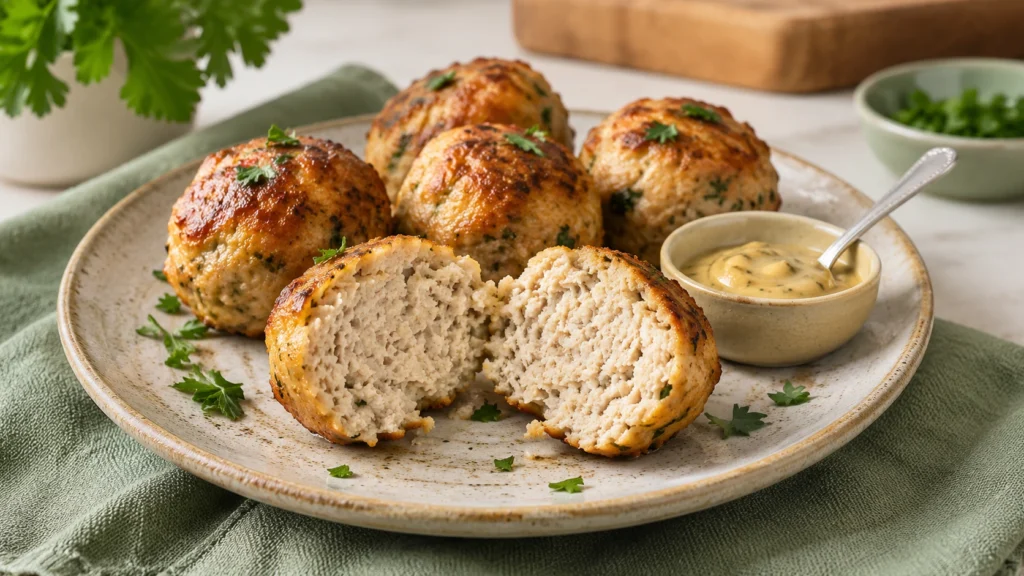
Dry or dense chicken burgers and meatballs can result from a very lean mixture, excessive cooking, overmixing, tight shaping or an unsuitable binder. A crumbly dry bite points toward moisture loss or formulation; a compact, springy bite suggests mixing and shaping deserve attention. Test two small patties with just one variable changed, cooking both to 165°F (74°C) before tasting.
Compare dry crumble and a dense springy bite
Ground chicken is a different cooking challenge from an intact breast or thigh. Grinding breaks the meat into small particles, which means the mixture must hold together when shaped and cooked. A tender meatball needs enough cohesion to keep its shape but should not necessarily have the very firm, elastic texture of a processed sausage. A burger must be sturdy enough to lift and flip without being so densely packed that every bite feels rubbery.
After checking the cooked center with a thermometer, split one patty or meatball. If it falls apart into dry grains, look at the recipe's lean composition, binder and cooking exposure. If it cuts into a compact disk that springs back when pressed, consider how vigorously the mixture was handled and whether it was squeezed tightly into shape. If the outside is hard and the inside softer, look at heat exposure and portion size. More than one factor may be responsible, but these observations give you a place to begin.
For chicken that is already safely cooked, use the dry chicken rescue tool to find ways to serve or repurpose it when it turns out dry.
Why ground chicken is especially sensitive to handling
When meat is ground, muscle proteins become more accessible to mixing. Salt and mechanical handling can help create a cohesive structure. This is useful in some preparations, particularly when a tight sausage-like texture is intended. In a tender burger or meatball, however, prolonged kneading and firm packing can produce a result that feels overly dense. The aim is not to avoid every form of mixing; it is to combine the ingredients evenly and stop once the mixture holds the shape needed for that particular recipe.
Meat science studies of ground and formed poultry demonstrate that heating changes protein structure, texture and cooking loss. They do not establish a universal amount of mixing or binder for every home recipe. The practical implication is to manage both preparation and cooking rather than assuming that all density is caused by the meat's fat percentage. A change in recipe formulation may not solve a patty that was kneaded excessively or cooked long after its center reached the recommended temperature.
Quick diagnosis: match the symptom to the next step
| What you notice | Likely explanation | Next step |
|---|---|---|
| Dry and granular | Lean mix or excessive heat | Check composition and endpoint |
| Dense and springy | Heavy mixing or compression | Test gentler mixing and shaping |
| Dry edges, softer center | Uneven size or heat | Shape similar portions; check centers |
Diagnose mixing, shaping and lean composition
Mixing: distribute rather than knead by habit
Prepare the seasoning, binder and any other ingredients so they can be added evenly. Depending on the recipe, mixing the non-meat ingredients together first may reduce the amount of handling required when the chicken is introduced. Fold or combine gently until the distribution is even and the mixture is cohesive. If you notice a paste-like consistency after vigorous mixing, consider whether the intended burger or meatball needs that degree of structure. Do not intentionally under-mix raw ingredients just to avoid density; the recipe still needs even seasoning and suitable binding.
Shaping: aim for consistent portions without compression
Form similar-sized meatballs or patties so the centers heat predictably. A large meatball can take longer than a smaller one, causing the small ones to overcook when both remain on the heat until the largest is done. Avoid packing the mixture into an unnecessarily tight ball. Use suitable clean equipment and handle the meat only as much as required to shape it. Keep the uncooked mixture refrigerated while you prepare to cook it, and wash hands and utensils after contact with raw ground poultry.
Lean composition: check what the package actually says
Ground chicken products are not all identical. Some contain predominantly lean breast meat, while others include a different combination of meat and fat. If a recipe was developed using one type, substituting an especially lean product can alter the texture. Read the package rather than assuming the word chicken implies a standard fat level. When appropriate to the recipe, a hydrated crumb mixture or other moisture-supporting ingredient can improve the eating quality, but too much dry binder may create an undesirable dense or bread-like result.
Cooking: measure the center of the actual portion
For meatballs, check the center of several larger pieces. For a thin burger, approach from the side to place the probe's sensing area in the thickest center. Ground poultry has the same recommended safe minimum of 165°F (74°C) as other chicken. Browning is not an adequate test. Once the appropriate safe endpoint is reached, avoid continuing to fry or bake simply because another item in the pan is still unfinished. Clean the thermometer after it contacts uncooked portions.
For your next meal, compare the options in our chicken meatballs & burgers collection and select a method that fits the texture you want.
For a complete recipe to compare against your preparation, see Ground Chicken Meatball Recipes, Chicken Piccata Meatballs. Follow the recipe’s actual cut, size and cooking directions rather than assuming the same timing applies to a different preparation.
Run a one-variable test with two small patties
Choose one suspected problem and prepare a small comparison instead of altering an entire dinner. For a mixing test, divide equivalent ingredient mixtures into two portions before the main mixing step. Combine one only until evenly cohesive; handle the other according to your usual approach. Shape both to similar thickness, use the same cooking method and measure the center of each. Cook both safely before comparing them. Do not taste raw mixture to check seasoning.
If the lightly handled version gives a more pleasant bite, you have a practical reason to reduce handling next time. If there is no noticeable difference, examine another variable, such as the fat content of the ground chicken or the binder. For a formulation test, keep shaping and cooking consistent while comparing two otherwise suitable recipes or equivalent mixtures with one deliberate change. Changing the grind, binder, cooking temperature and shaping all at once makes the result difficult to interpret.
A hypothetical example is a tray of meatballs that tastes dry at the edges but dense in the middle. The cook remembers rolling each very firmly and waiting until the largest one finished before removing the rest. The next attempt could first address portion size, ensuring the balls are comparable and checking individual centers. Once the cooking exposure is better controlled, a separate test can investigate shaping pressure. This example does not promise a particular improvement; it shows how to isolate the variables.
How to serve the cooked batch
If safely cooked meatballs are mildly dry, a sauce such as tomato, gravy or a lemon-based sauce can make each bite more enjoyable. If they are unusually compact, cut them into smaller pieces and serve in a suitably moist dish rather than recooking them to try to soften the entire structure. A dry burger may be more enjoyable broken into a sauced rice bowl than served on a thick dry bun. Do not assume that longer simmering reverses the effect of past mixing and cooking.
For meal prep, refrigerate cooked portions promptly in shallow containers and reheat leftovers to 165°F (74°C). Keep a separate sauce if it suits the serving plan. The sauce helps with eating quality, while appropriate cooling and reheating address safety. These are two different goals, and neither should be neglected just because the meat was originally ground instead of whole.
For broader method and preparation guidance, use our chicken cooking guide.
Sources and references
- FoodSafety.gov — Safe minimum internal temperatures — Thermometer and poultry / stuffing / leftovers safe endpoint.
- Effect of meat temperature on proteins, texture, and cook loss for ground chicken breast patties — Heating changes texture, protein and cooking loss; formed chicken study, not a universal kitchen protocol.
- FoodSafety.gov — People at risk of food poisoning — Refrigeration time limits, storage and reheating.
Frequently asked questions
Can I mix the meatball mixture less?
Yes, if you currently knead it heavily and the recipe does not require a very elastic texture. Mix until the ingredients are evenly distributed and the mixture holds its intended shape.
Does switching to a different grind change the result?
It can. Different ground chicken products may vary in composition, fat and particle size. Compare their labels and keep the remaining preparation and cooking variables consistent.
Why do chicken burgers crumble when cooked?
Possible factors include a very lean mixture, inadequate cohesion, too much dry binder or excessive cooking. Examine the cooked texture and test one change in a small portion before adjusting the full recipe.
Can I add more breadcrumbs to make meatballs tender?
Not indiscriminately. A suitable hydrated binder may help in some recipes, but excessive dry crumbs can absorb liquid and change the structure. Follow the recipe proportions before testing a small adjustment.
How do I know ground chicken is safely cooked?
Use a food thermometer to verify 165°F (74°C) at the center of the thickest portions. Surface browning and a firm texture are not sufficient checks.
Can I rescue a dense cooked chicken burger?
You cannot reliably undo its compact structure, but smaller pieces served with a moist sauce or filling may be easier to eat. Rescue only chicken that has been safely cooked and stored.


