
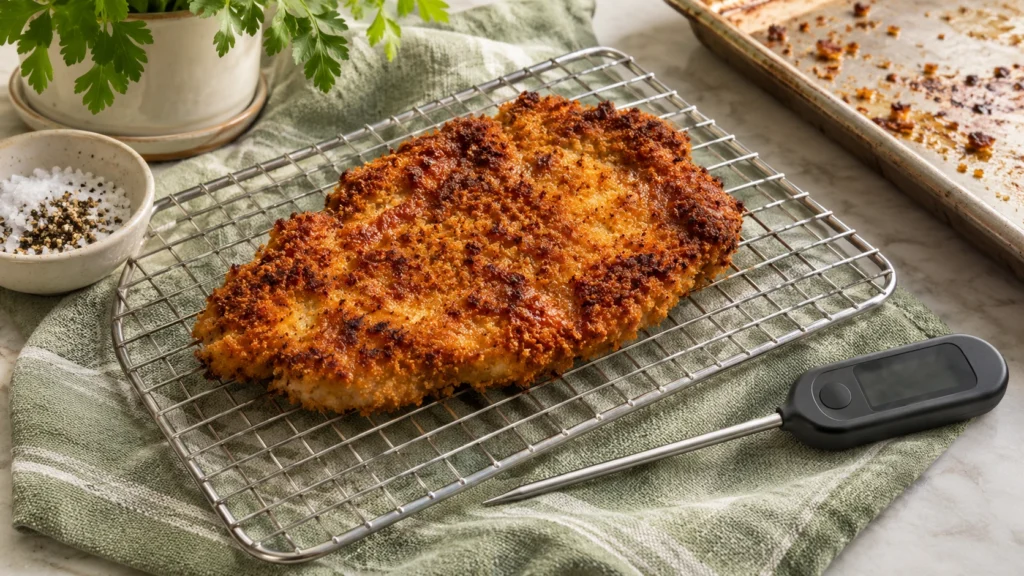
If chicken is burnt outside but undercooked inside, stop the intense browning heat and check the thickest portions with a thermometer. Immediately finish undercooked pieces using a gentler cooking method, such as an oven, until every piece reaches 165°F (74°C). Do not refrigerate partially cooked chicken to finish tomorrow. If handling or storage has been unsafe, discard it instead of attempting a rescue.
Stop and check multiple thick pieces
A dark crust is not the same thing as a cooked center. Bread crumbs, sugar-containing glazes and seasonings can brown quickly while heat still has to travel through a thick piece of chicken. If the outside is nearly black and you are concerned about the center, continuing at exactly the same heat will probably worsen the crust. First remove the pan from intense heat or move the chicken to a cooler area of the cooking setup while preparing an immediate finishing method.
Use a food thermometer rather than cutting many pieces and judging their color. A browned cutlet may contain an underheated region even if the outside is crisp. Insert the sensing area into the thickest part, approaching from the side when a cutlet is thin. Avoid hitting the pan, bone or a large pocket of filling. Check more than one place in thick, irregular pieces and check several pieces individually. The recommended household minimum for every part of the chicken is 165°F (74°C).
Use the chicken internal temperature checker to compare your thermometer reading with the recommended endpoint for chicken.
Separate any fully cooked pieces using clean utensils and a clean plate. Don't put them back on a plate that previously held partially cooked meat. Keep pieces that still need cooking separate, and wash the probe after contact with undercooked chicken before touching ready-to-eat portions. This distinction stops you from continuing to burn pieces that are already safe merely because their neighbors are not ready. It also prevents transferring raw juices onto the finished food.
Quick diagnosis: match the symptom to the next step
| What you notice | Likely explanation | Next step |
|---|---|---|
| Dark coating, center below 165°F | Exterior ahead of interior | Immediately finish with gentler heat |
| Dark coating, center at 165°F | Surface quality problem | Remove from heat, trim bitter coating if needed |
| Unequal readings across pieces | Uneven thickness or heat | Remove ready pieces and finish the rest |
Choose a lower-heat finish suited to the original method
Pan-fried chicken or breaded cutlets
If the pan is smoking or the coating is becoming bitter, transfer undercooked pieces immediately to a prepared oven-safe tray. A rack can help keep the already browned surface away from accumulated juices, but an ordinary tray is also useful if that is what you have. Use a moderate oven setting suited to your recipe and monitor the internal temperature. Loosely shielding the darkest area with foil may slow additional surface browning. Do not cover tightly if preserving crispness is important. Any texture trade-off is secondary to completing safe cooking.
If the crust itself is inedible, focus on cooking the meat safely first. You can remove an objectionable bitter coating afterward and serve the safely cooked meat with a sauce or a new accompaniment. Avoid peeling partially cooked chicken with your fingers or reusing contaminated plates. An immediate transfer between cooking methods is a reasonable rescue; holding the half-cooked chicken at room temperature while planning another meal is not.
Grilled chicken with an overly dark glaze
Move the piece away from direct flame to a cooler indirect region of a grill that is set up for continued cooking, or immediately finish in a ready oven. Sweet glazes can scorch before thick meat reaches temperature. Do not repeatedly brush on more sauce to hide the dark color, particularly if a brush touched raw chicken. Keep a fresh separate portion of sauce for serving. Check the center and the thickest area near the bone where present without contacting the bone itself.
Oven-baked pieces that brown too quickly
If the top of the chicken is turning dark while the center is below the required temperature, check whether the pan sits close to the top heating element or whether a broiler is running. Move the tray away from direct intense top heat, stop using the broiler and continue with a gentler baking mode. A loose foil shield can protect the surface. The time needed depends on the piece thickness, starting temperature, oven and placement, so don't rely on an arbitrary additional number of minutes.
When you should not rescue
If the chicken was deliberately browned earlier, chilled while still undercooked and brought back to the kitchen hours later, do not treat the remaining cooking as a normal finishing step. USDA specifically warns against partially cooking poultry, refrigerating it and finishing it later. Harmful bacteria may have survived the incomplete cooking. Likewise, if a partially cooked meal was held unsafely, do not salvage it by trimming burnt parts or adding sauce. The concern is the history of the food, not just its current appearance.
For your next meal, compare the options in our baked chicken recipes collection and select a method that fits the texture you want.
For a complete recipe to compare against your preparation, see Easy Chicken Schnitzel Dinner Recipes, Crispy Oven Baked Chicken. Follow the recipe’s actual cut, size and cooking directions rather than assuming the same timing applies to a different preparation.
Prevent a dark crust before the center is ready
One of the biggest differences between a thin schnitzel and a thick breast is the distance heat must travel to the center. A thin outer layer browns quickly either way. If you use a recipe designed for an evenly thin cutlet with a whole thick breast, the recipe's method may be inappropriate even if the ingredient list looks identical. Prepare even portions according to the recipe, or select a method intended for larger pieces. A thermometer lets you check the progress independently from the coating color.
Heat management is equally important. Preheat according to the recipe, observe how the first piece browns and adjust if the coating darkens dramatically before the center warms. If many pieces are fried in the same oil, loose crumbs may accumulate and burn. Remove these safely with suitable equipment and avoid crowding the pan. For sugar-rich sauces, use a recipe that applies the glaze at an appropriate stage rather than exposing it to the longest possible cooking time.
A practical example with two cutlets
Imagine a skillet contains an evenly thin cutlet and a thick, folded piece. Both have a similarly dark coating, but the thermometer shows that only the thin piece has reached the safe endpoint. Transfer the finished cutlet to a clean plate. Immediately continue cooking the thick piece using a method that reduces additional intense browning. The next time, prepare portions of comparable thickness or cook the thick piece separately. That is a more specific correction than simply turning the heat down throughout every recipe.
Record the cut thickness, heat level and whether you were working with a sugary coating or plain crumbs. If the same recipe consistently gets dark too early, change one factor at a time: use a thinner portion, adjust the heat distribution or delay a glaze when supported by the recipe. Keep checking the internal temperature. With this approach you can identify which adjustment improves the balance between surface and center instead of introducing several unknown changes in one dinner.
For broader method and preparation guidance, use our chicken cooking guide.
Sources and references
- FoodSafety.gov — Safe minimum internal temperatures — Thermometer and poultry / stuffing / leftovers safe endpoint.
- USDA FSIS — Do not partially cook poultry for later — Do not refrigerate partially cooked poultry to finish later.
Frequently asked questions
Can I finish browned chicken in the oven?
Yes, when the transfer is immediate and the chicken has otherwise been handled safely. Use an oven-safe tray and a suitable oven setting, then verify that all thick portions reach 165°F (74°C). A browned surface does not establish doneness.
How do I prevent the coating from burning?
Use even portions and the cooking approach intended for that thickness. Avoid prolonged exposure to intense heat once the coating is dark, and manage accumulated crumbs and sugary glazes according to the recipe.
Can brown chicken still be raw inside?
Yes. The outside receives heat first and browning can occur before the center reaches a safe temperature. Check the interior with a thermometer rather than treating the exterior color as a safety signal.
Can I refrigerate partially cooked chicken and finish it tomorrow?
No. USDA advises against browning or partially cooking poultry to refrigerate and finish later. Continue cooking immediately or discard the chicken if its handling is unsafe.
Will covering the chicken with foil solve the problem?
Foil can reduce additional surface browning during an immediate oven finish, but it cannot prove the interior is ready. Check the thickest part with a thermometer; covering can also soften crisp coating.
Should I throw away the chicken if the outside is burnt?
A bitter, charred coating may be a quality problem even when the meat is safely cooked. Remove objectionable burnt areas after safe cooking if the rest is palatable. Discard the food if its safety history is uncertain.


